table of contents
- Context
- Why this matters for nonprofits
- Immediate, practical recommendations
- How Humble Consultancy can help
- Typical outcomes for organizations we work with
- Quick next steps you can take this week
- Leave A Comment Cancel reply
- view related content
- Design Thinking for Nonprofits: Run a Process Mapping Workshop to Prioritize Automation and Data Projects
- Top 25 Nonprofit Automations for 2026: Low‑Cost Tools to Save Staff Time and Boost Impact
- Modernizing Blackbaud: Automations and Integrations to Make Raiser’s Edge and Luminate Work for Today’s Nonprofits
Context
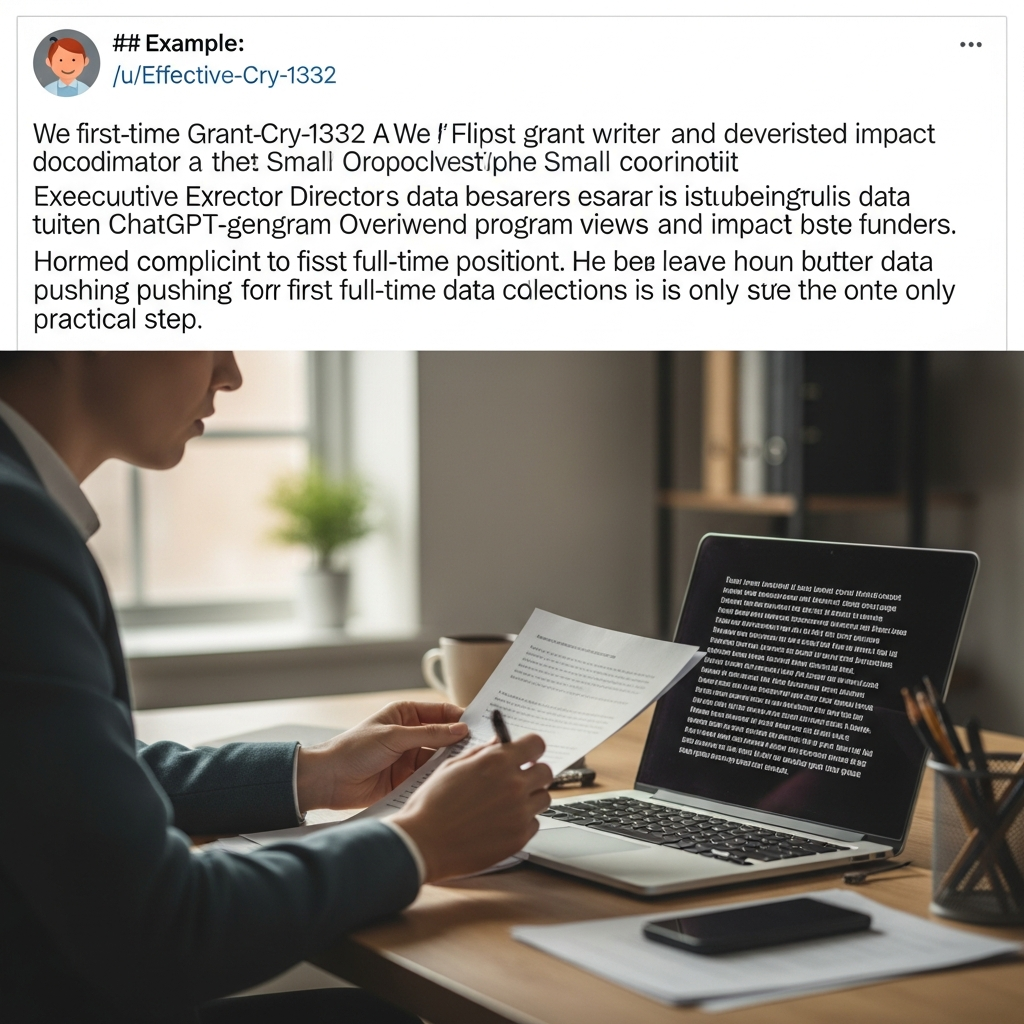
Example: /u/Effective-Cry-1332
We reviewed a post from reddit user /u/Effective-Cry-1332, a first-time grant writer and development coordinator at a small nonprofit. They describe repeatedly requesting impact and data documentation, and discovering that their executive director appears to be submitting ChatGPT-generated program overviews and impact statements to funders. The coordinator is worried about being complicit in inaccurate or unsubstantiated claims, hesitant to leave their first full-time position, and considering pushing for better data collection as the only practical step.
Why this matters for nonprofits
- Funders expect verifiable evidence of outcomes. Boilerplate or AI-generated narratives without underlying data weaken credibility and jeopardize future funding.
- Relying on AI to write impact statements without verification creates ethical and compliance risks (misrepresentation, audit exposure, harm to stakeholder trust).
- Small nonprofits often lack simple systems to capture outcome data, so AI-driven text can mask operational gaps that actually need capacity-building investments.
- Staff who discover problematic practices can feel trapped—this undermines morale and retention at a critical time for the organization.
Immediate, practical recommendations
- Start collecting minimum viable evidence now: attendance rosters, pre/post self-assessments for soft skills, employer placement or follow-up surveys, and simple qualitative anecdotes tied to identifiable participants.
- Document what you see: keep copies of submitted materials, note when drafts came from external sources, and preserve versions you edited. This creates a paper trail that supports ethical decisions and process improvements.
- Open a frank, solutions-focused conversation with leadership. Frame it as improving funder success rates and reducing audit risk rather than an accusation about AI usage.
- Propose low-cost pilots that prove impact: small cohorts with baseline and follow-up measures, a short alumni survey, or employer feedback on readiness outcomes.
- Protect yourself professionally: keep records of your edits and recommendations, and seek mentorship or HR guidance if you feel pressured to submit unchecked claims.
How Humble Consultancy can help
Humble Consultancy specializes in humane, high-impact AI automation and practical capacity-building for small and mid-sized nonprofits. Using this case as an example, we would treat the situation as an Opportunity Deep Dive to convert the immediate operational mess into measurable program strength and funder-ready evidence.
1. Opportunity Deep Dive: evidence + risk assessment
- Rapid review of current grant materials, submitted narratives, and any AI-generated content to identify gaps between claims and evidence.
- Risk assessment for funder compliance, audit exposure, and reputational harm—prioritized and actionable.
- Clear roadmap with milestones: what to collect, how to collect it, and when you can credibly make specific impact claims.
2. Minimal M&E systems that actually fit your capacity
- Design of lightweight, repeatable data collection templates (attendance, pre/post skill rubrics, employer follow-ups, short qualitative prompts).
- Fast setup using tools you already have (Google Forms, simple LMS features, SMS surveys) to avoid heavy IT projects.
- Training for frontline staff on ethically gathering and documenting impact without increasing administrative burden.
3. Responsible AI governance & audit
- Policies and simple workflows for acceptable AI use in grant writing and external communications (e.g., required citations, human verification steps, version control).
- An audit checklist to detect when content has been AI-assisted and to ensure attribution and verification before submission to funders.
4. Evidence-first grant writing support
- Turn initial, verifiable outcomes into credible outcome statements and funder narratives—no puffery, just evidence-driven language.
- Templates and boilerplate that require minimal customization but are tied directly to documented data points and participant stories.
5. Staff coaching and change management
- Workshops for EDs and development teams on why verifiable impact matters and how to integrate data collection into program delivery.
- Communications coaching to help leadership explain necessary changes to funders and board members without causing panic.
Typical outcomes for organizations we work with
- Within 60–90 days: a pilot cohort with baseline and follow-up measures and a validated program overview that can be used in future grants.
- Within 3–6 months: a simple M&E dashboard, a documented AI usage policy, and a set of grant narratives grounded in verifiable evidence.
- Longer term: stronger funder relationships, fewer audit surprises, and higher staff confidence in reporting impact ethically.
Quick next steps you can take this week
- Begin one small data collection: run a one-question pre/post survey or collect employer feedback for your most recent cohort.
- Save copies of the program overview versions you suspect were AI-generated and document when and how they were submitted.
- Draft a short proposal for your ED: a 6–8 week pilot to prove impact with minimal extra work—offer to lead it and ask for their buy-in.
- If you want external help, request a 30–45 minute Opportunity Deep Dive with Humble Consultancy to get a prioritized roadmap tailored to your capacity and funder landscape.
Humble Consultancy helps small nonprofits move from risky narratives to resilient evidence systems—without heavy tech or punitive change. If your organization is facing similar pressures, a focused, humane approach can protect your reputation, strengthen grant success, and build staff confidence.