
table of contents
Context
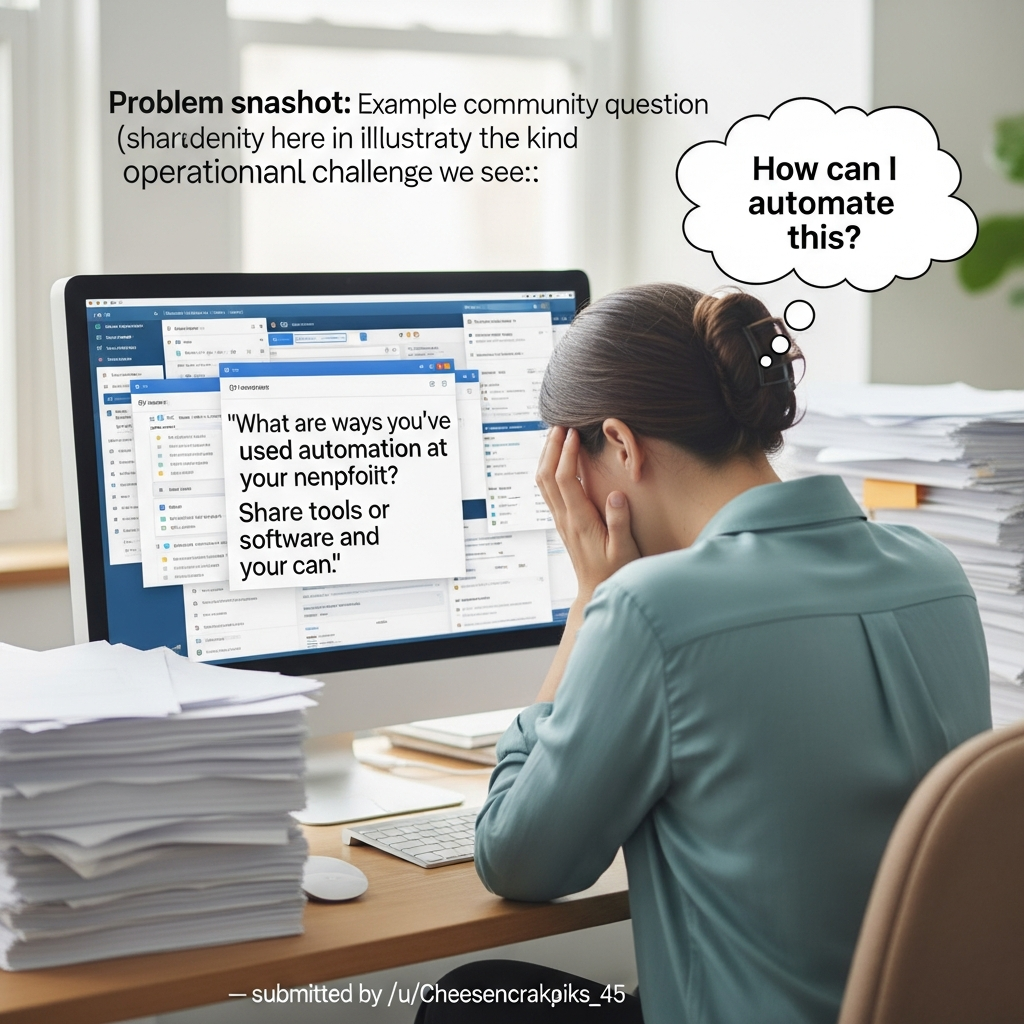
Example: Reddit user /u/MyNameIsYeffff recently asked whether nonprofit organizations are using design-thinking workshops to address organizational challenges (COVID response, automation, data analysis, marketing, volunteer management, etc.) and whether those organizations handle this work in-house or bring in consultants for strategy and implementation.
Common nonprofit challenges raised by this example
- Unclear problem framing: teams struggle to agree on which organizational problems are highest priority or how to define success.
- Capacity gaps: limited internal staff time or skills to run workshops, design pilots, or implement technical solutions.
- Fragmented data and reporting: decisions get delayed or are made without reliable metrics or dashboards.
- Volunteer and stakeholder coordination: recruitment, retention, and scheduling often remain manual and error-prone.
- Fear of change: leadership worry about upfront costs and disruption when adopting automation or new processes.
How Humble Consultancy approaches this problem
At Humble Consultancy we specialize in humane, high-impact AI and automation for nonprofits. We use design thinking as both a discovery method and an engagement tool—helping teams quickly align on problems while producing actionable plans that respect limited budgets and staff capacity.
Design-thinking workshops (strategy + implementation lens)
- Rapid problem-framing sessions to convert vague challenges into testable hypotheses.
- Co-design workshops that include staff, volunteers, and beneficiaries to surface real constraints and opportunities.
- Low-risk prototyping plans so the organization can pilot ideas without committing large budgets up front.
- Train-the-trainer options so nonprofits can run future workshops internally.
Automation & AI that meets nonprofit constraints
- Small, targeted automation pilots (e.g., volunteer scheduling, intake forms, basic triage bots) that free up staff time quickly.
- Data pipelines and dashboards to turn fragmented data into an operational view for program leads and funders.
- Human-centered AI solutions that augment staff rather than replace them—improving quality while keeping oversight human.
Implementation support and capacity building
- Short-term implementation teams to deploy pilots and hand off sustainable processes to internal staff.
- Documentation, training, and mentoring to embed new workflows and tools.
- Flexible pricing models for nonprofits: sliding-scale, project-based, or mixed pro-bono + paid engagements.
Typical engagement flow
- Discovery (1–2 weeks): remote interviews, light data review, and a one-day co-design sprint.
- Pilot design (2–4 weeks): specific prototype scope, success metrics, and a simple implementation timeline.
- Pilot implementation (4–12 weeks): build, train staff, measure early indicators, iterate quickly.
- Handoff and scale (ongoing): documentation, training, and options for continued support or local enablement.
Decision guide: in-house vs consultant
When to consider in-house: when you have consistent internal capacity, a leader committed to change, and an existing data/tech foundation.
When to bring a consultant: when you need impartial facilitation, rapid prototyping skills, technical implementation experience, or want to accelerate impact without overloading staff. Many nonprofits find a hybrid model works best—consultants design and run the first pilot, then coach internal staff to scale.
Next steps & resources
If your nonprofit is exploring these questions, Humble Consultancy can help you translate them into a pragmatic plan that balances strategy and implementation. We offer complimentary exploratory calls to scope a single sprint or pilot and provide a written roadmap you can use to secure board or funder approval.
If you’d like, we can prepare a short Opportunity Deep Dive tailored to a specific problem your organization is facing (for example: volunteer scheduling automation, intake form triage, or a data dashboard for program outcomes). This deliverable includes a one-page problem statement, recommended first pilot, rough cost estimate, and success metrics you can share with stakeholders.