table of contents
- Overview
- Why this matters for nonprofits
- Practical immediate steps your team can take
- How Humble Consultancy can help
- Next steps
- Leave A Comment Cancel reply
- view related content
- Design Thinking for Nonprofits: Run a Process Mapping Workshop to Prioritize Automation and Data Projects
- Top 25 Nonprofit Automations for 2026: Low‑Cost Tools to Save Staff Time and Boost Impact
- Modernizing Blackbaud: Automations and Integrations to Make Raiser’s Edge and Luminate Work for Today’s Nonprofits
Overview
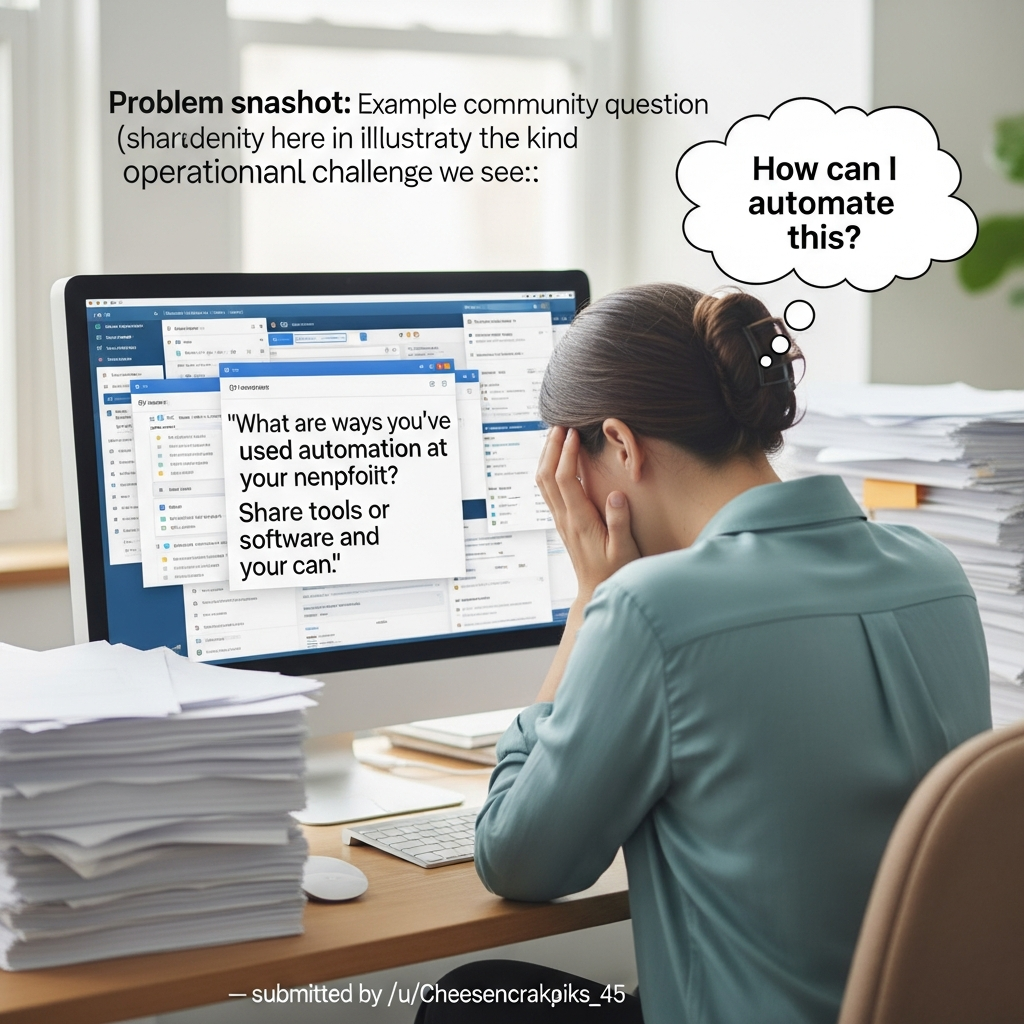
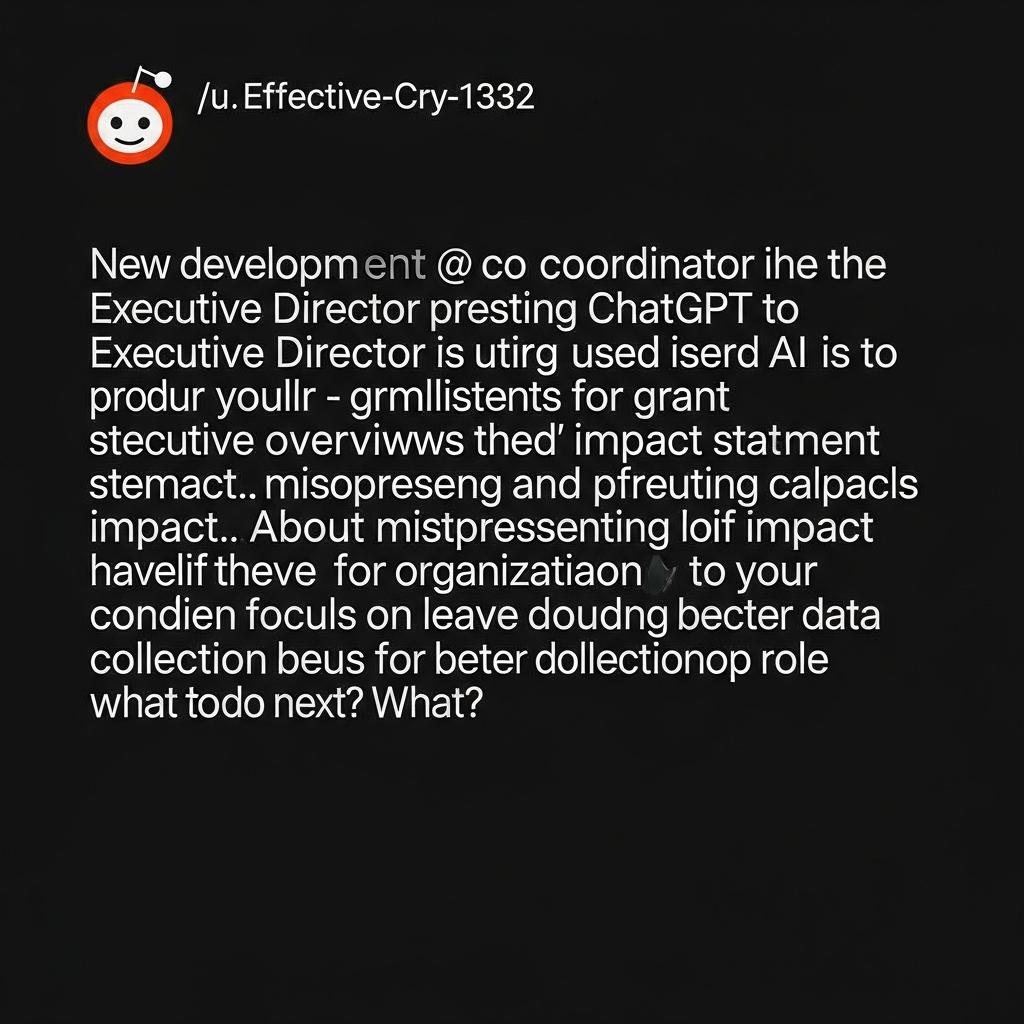
Using a recent Reddit post from /u/Effective-Cry-1332 as an example, this post outlines a common nonprofit problem: a new development coordinator suspects the executive director is using ChatGPT to produce program overviews and impact statements for grant applications. The coordinator is conflicted—having used AI for small edits themselves—and worries about misrepresenting the organization’s impact, but is hesitant to leave the role early in their career. They’re considering focusing on better data collection and are asking what to do next.
Why this matters for nonprofits
Authenticity of impact reporting is core to donor trust, regulatory compliance, and program improvement. When applications contain generic or AI-generated copy that isn’t tied to real data, organizations face multiple risks:
- Reputational harm if donors, partners, or beneficiaries discover inconsistencies.
- Reduced funding effectiveness because decisions are made without accurate evidence.
- Ethical and legal exposure if claims are knowingly misleading.
- Internal morale problems when staff feel complicit in overstating outcomes.
Practical immediate steps your team can take
If you’re in the coordinator’s position or advising a small nonprofit, start with pragmatic, low-friction actions that protect the organization and build evidence over time:
- Conduct a quick content audit: catalog recent grant narratives and note claims that lack sourceable data.
- Open a constructive conversation with your ED: frame it as improving fundraising credibility rather than an accusation.
- Introduce minimal, high-value data collection now—pre/post self-assessments, attendance, and simple employer follow-ups—so you can link program activities to outcomes.
- Create a template that ties every claim to one of three things: (a) program data, (b) participant stories with consent, or (c) acknowledged external benchmarks.
- Document AI use: when drafts are assisted by AI, add an internal note and require human verification and attribution in public-facing documents.
- Learn to translate small data into credible impact statements: even a 6-month participant skills checklist can substantiate claims around soft-skills growth.
How Humble Consultancy can help
1. Assess & Rescue: Audit your current grant materials
We perform a rapid content and claims audit to identify where narratives outpace evidence. Deliverables include a prioritized list of risky claims, redlines for grant narratives, and a rewrite plan that aligns language with verifiable data and participant consent.
2. Design lean, actionable data systems
We design low-cost measurement systems tailored to resource-constrained teams. Typical deliverables:
- A measurement framework mapping programs to 3–6 high-value indicators (e.g., workplace readiness rubric, attendance, placement rate).
- Simple data collection tools (Google Forms/Sheets, Typeform templates) and standard operating procedures to ensure consistent capture.
- A 90-day pilot plan to collect baseline and first follow-up results so you can make evidence-based statements within a funder cycle.
3. Ethical AI policy & governance
We help you create practical policies for responsible AI use that fit a small nonprofit context—covering when AI can be used, disclosure language for funders, a verification checklist, and a staff sign-off process to ensure accuracy and attribution.
4. Grant-writing & impact storytelling grounded in evidence
We support the rewrite or co-authorship of grant narratives so that stories are authentic and backed by data. Services include translating quantitative and qualitative inputs into persuasive, honest narratives and drafting disclosure language about AI assistance when appropriate.
5. Training & capacity building
We run short workshops for lean teams—teaching how to collect meaningful data without burdening staff or participants, how to turn small datasets into credible impact claims, and how to use AI as a drafting tool while maintaining human validation.
6. Set up high-impact automations that preserve authenticity
We implement automations that remove repetitive tasks (e.g., survey reminders, basic data cleaning, report templates) while ensuring the interpretation and claims remain human-reviewed. This allows teams to scale their evidence collection without sacrificing integrity.
Next steps
If this example sounds familiar, start by having one candid, non-confrontational conversation with your ED and propose a concrete pilot to collect program evidence. If you’d like hands-on help to move quickly, Humble Consultancy specializes in humane, high-impact AI automation for nonprofits and can:
- Audit your grant materials and data gaps within 1–2 weeks.
- Deliver a starter measurement toolkit and a 90-day pilot plan.
- Provide a short training and an AI-use policy template you can adopt immediately.
To discuss options, contact Humble Consultancy at [email protected] and reference the example from /u/Effective-Cry-1332 so we can tailor recommendations to your context.