table of contents
- Situation overview
- How Humble Consultancy can help
- Simple implementation plan (example)
- Expected outcomes and metrics
- Next steps
- Leave A Comment Cancel reply
- view related content
- Design Thinking for Nonprofits: Run a Process Mapping Workshop to Prioritize Automation and Data Projects
- Top 25 Nonprofit Automations for 2026: Low‑Cost Tools to Save Staff Time and Boost Impact
- Modernizing Blackbaud: Automations and Integrations to Make Raiser’s Edge and Luminate Work for Today’s Nonprofits
Situation overview
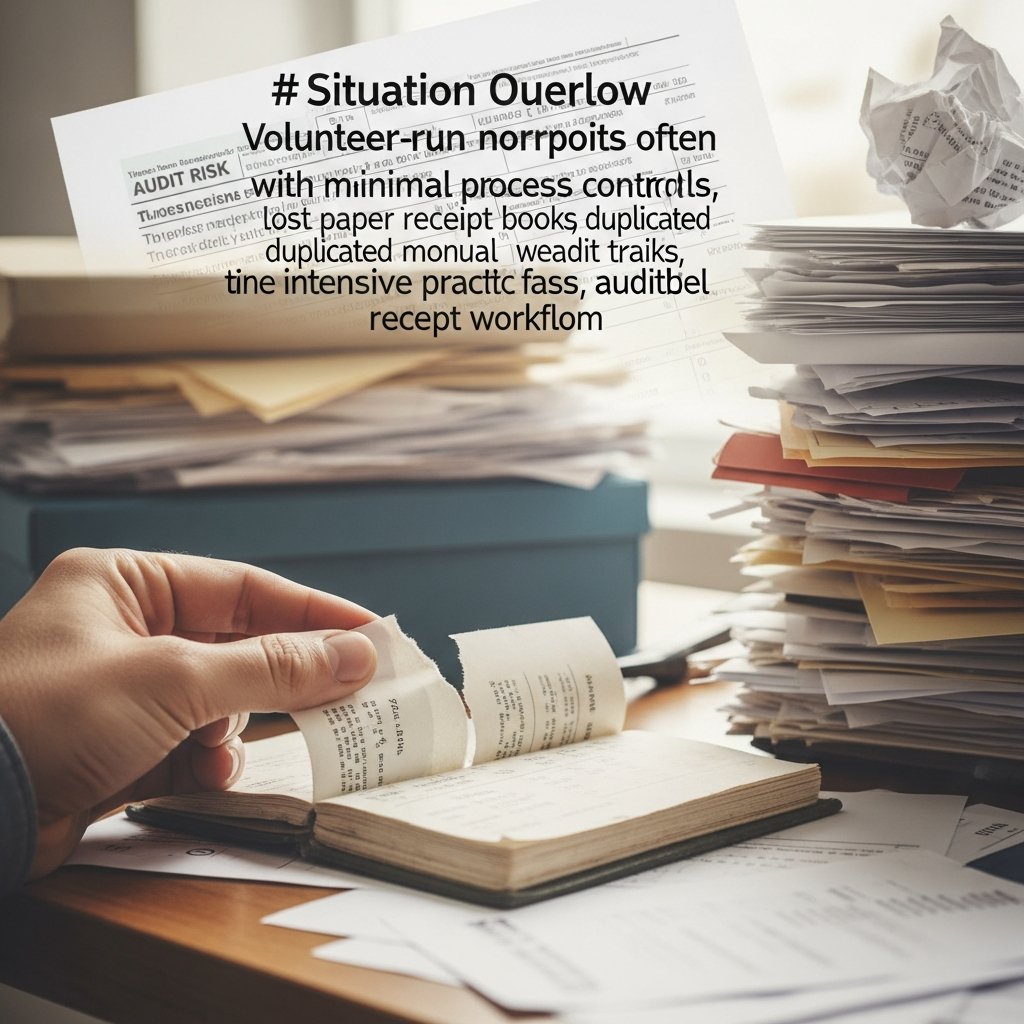
Volunteer-run nonprofits often accept donations with minimal process controls. That vulnerability shows up in lost paper receipt books, duplicated manual data entry, weak audit trails, and massive time sinks at tax time. The example below illustrates how a small, local NPO moved from risky, labor-intensive practices to a fast, auditable digital receipt workflow.
Example from the field
TLDR: The organization relied on handwritten carbon-copy donation receipt books that were regularly lost, filled out incorrectly, or taken by departing volunteers. At tax time the old treasurer keyed everything into Excel, re-issued receipts, and the charity had been audited previously because of these issues. After implementing a simple automation that links the donation POS to a centralized revenue spreadsheet and an automated email system, official tax receipts are now emailed to donors in about nine seconds. The result: a clear audit trail, automated backups, and no dependence on volunteer bookkeeping competence — all running from a cheap tablet at the donation point.
How Humble Consultancy can help
Humble Consultancy specializes in humane, high-impact automation for nonprofits. Using the scenario above as an example, here’s how we work with charities to remove manual risk, build audit-ready processes, and protect volunteer time and goodwill.
- Rapid control assessment: We perform a short audit of your donation processes and internal controls to identify single points of failure (e.g., paper receipt books, uncontrolled POS handoffs, lack of backups).
- Design a low-cost, audit-friendly workflow: Create a donor receipt workflow that includes POS capture, centralized revenue ledger, automated receipt generation, and archival storage — all designed for minimal volunteer friction.
- POS integration and workarounds: Where POS vendors don’t offer reliable receipts, we implement stable integrations (API or webhook-based) or lightweight middleware to bridge the gap, just like the workaround used in the example.
- Serverless automation & secure storage: Build cloud-based automations that write to a single authoritative spreadsheet or database, generate signed PDF receipts, and archive them to secure storage for audit retention.
- Volunteer-friendly front ends: Deliver an easy tablet-based point-of-donation interface that minimizes training needs and prevents lost paper books or manual rekeying.
- Compliance & audit readiness: Ensure receipts meet tax authority requirements, maintain tamper-evident logs, and produce exportable audit packages for accountants and regulators.
- Change management & adoption: Run short pilots with long-tenured board members, provide simple SOPs, and offer on-site/remote training to overcome resistance to change.
- Ongoing support & monitoring: Provide lightweight maintenance, automated health checks, and a human escalation path so volunteers aren’t left troubleshooting integrations.
- Cost and funding help: Identify low-cost hardware options (cheap tablets), estimate ongoing cloud costs, and support grant or donor proposals to fund the transition.
- Ethical AI augmentation (where useful): Use AI sparingly and transparently — for example, to auto-classify donation notes, extract donor details from scanned forms, or prioritize flagged exceptions — always with human-in-the-loop review.
Simple implementation plan (example)
- 1. Discovery (1–2 weeks): Map current receipt flow, interview volunteers, identify data sources and POS capabilities.
- 2. Prototype (1–2 weeks): Build a minimal integration that captures a donation event, writes to a central ledger, and sends a receipt email.
- 3. Pilot (2–4 weeks): Run the system at a few events or locations, collect feedback from volunteers and donors, iterate.
- 4. Rollout & training (1–2 weeks): Deploy across the organization, deliver short training sessions, publish SOPs and audit documentation.
- 5. Handover & support: Handover admin controls, schedule periodic reviews, and set up monitoring/alerting for exceptions.
Expected outcomes and metrics
- Reduction in manual re-keying time (typical: 80–95% fewer duplicate entries).
- Immediate delivery of tax receipts to donors (seconds instead of days/weeks).
- Clear, exportable audit trails that reduce audit risk and respond to regulator queries quickly.
- Lower volunteer burnout: fewer tedious admin tasks and simpler training for new volunteers.
- Reliable backups and retention for statutory recordkeeping.
Next steps
If your nonprofit is still relying on paper receipt books or manual reconciliation, Humble Consultancy can run a short engagement to design a resilient, low-cost solution tailored to your systems and volunteers. We focus on practical automations that respect volunteer capacity and strengthen trust with donors and auditors.
To discuss a no-obligation quickscan or pilot, contact us at [email protected] or visit our contact page: Humble Consultancy — Contact.